
In a long artistic career spanning over eighty years, Professor Chow remains faithful to the
venerable tradition of Chinese painting and calligraphy, upon which he has forged a new and
personal expression. He has attained pre-eminence as an artist, art critic and art educator,
and is particularly acclaimed as a modern master of the Wu School and the literati tradition
outside of China.
- Kao Mayching - Former Chair Professor of Fine Arts at CUHK
About the Artist
1923
Born in Suzhou, Jiangsu Province on 21 February. Chow's first name at birth was Changyuan. He has an elder brother and a younger sister. His father, Zhou Chilu (1889–1966), was a noted painter in the Suhang region (Suzhou and Hangzhou) specialising in figure painting. From an early age, Chow closely watched his father draw and also enjoyed the great variety of plants in his family-run garden. His affinity with nature and painting thus grew naturally from his youth.
1930
On one occasion he scribbled on a painting that his father was trying to finish. Although the delicate brushwork was destroyed, his talent as an artist was discerned as a result. From then on, he began practising drawing under the tutelage of his father, who later became the role model for his artistic career and life in general.
1935
Just twelve years old, his painting Pear Blossoms Bathed in Moonlight depicting a multitude of pear blossoms was displayed at the Exhibition of Chinese Painting and Calligraphy, organised by Suzhou city's Bureau of Education.
1937
The year the Second Sino-Japanese War began also marked the beginning of Chow's formal artistic training. Under the guidance of his father, he apprenticed Wu Silan (1908-1964), Liu Junran (1901-1987) and Zhang Xingjie (1909-1991) to study the painting of flowers, fruits and vegetables as well as birds and insects, respectively. In addition, he learned poetry, verses and the art of calligraphy from his uncle, Zhou Mutian, while he learned the skills of bamboo and seal carving from his brother, Zhou Yujing. In his spare time, he visited Wu Silan's studio where a rich collection of old masters' paintings was housed providing him a valuable opportunity to further his knowledge of Chinese art history. Under the auspices of his teachers, he held his first solo painting exhibition at the Suzhou Beiju Youth League. In the same year, he met and befriended the Shanghai painter, Wang Jiqian (1907-2003) during one of his visits to Wu Silan's studio.
1944
Chow graduated from the Suzhou Fine Arts College and then studied landscape, bamboo and orchid painting under the tutorship of Wu Zishen (1894-1972). Wu Zishen founded the Suzhou Fine Arts College in 1922. Wu was admired in the Suzhou painting community and was often associated with three other painters from the region, namely Wu Hufan (1894-1968), Wu Daiqiu (1878-1949) and Feng Chaoran (1882-1954). They were collectively known as 'Three Wus and One Feng'.
1945
Chow held a solo exhibition in the war-torn city of Nanjing.
1946
Shortly after the end of WWII, Chow married Luk Hing-yu, a painter also from Jiangsu, in Nanjing
1948
His son, Frank Chow, was born.
1949
The founding of the People's Republic of China was followed by the Chinese civil war. The pressing social and political situation forced many artists and scholars from the north of China to escape southward for the sake of maintaining traditional Chinese artistic values. Chow, who was twenty-seven years old at the time, left Suzhou for Shanghai and then went further south to Guangzhou with his wife and son. They arrived in Hong Kong on 6 October. To make a living, he first worked at Baixin sudian, a bookstore run by a friend of his father and produced two books, Xianggang youlan shouce (Hong Kong guidebook) and Zhongguo er qian nian yuyan (Chinese prophecies from the last two thousand years). Chow and his wife also drew illustrations for Christmas cards. In November, he was invited by photographer Lang Jingshan (1892-1995) to contribute two paintings to the Joint Exhibition of Chinese Painting and Calligraphy at the Cecil Arts Gallery, in the lobby of the Hotel Cecil, Hong Kong.
1951
He was introduced to Zhang Daqian (1899-1983) by his friend Qin Ziji and his teacher Wu Zishen. Zhang conveyed his appreciation of four of Chow's landscape paintings by adding individual inscriptions to Cloudy Mountain, Suzhou in My Dreams, Listening to the Stream, and Viewing the Waterfall. They later collaborated in the production of five paintings titled Lotus, Rose and Butterfly, Five Auspicious Symbols, The Beauty of Earth and the Fragrance of Heaven as well as The Coming Auspice, which were shown in his first solo exhibition at the Cecil Arts Gallery. The exhibition was accompanied by a preface by Wu Zishen and ran for only two days. At the exhibition, he sold twenty-one paintings while also meeting the senior calligrapher and musician Xu Wenjing (1885-1975). In the same year, he studied the Dafengtang Collection of Zhang Daqian and was particularly drawn to the calligraphic works and paintings of Bada Shanren (1626-1705) on the theme of the lotus. It was then that he decided to further research Bada Shanren's art.
1952
His daughter, Amelia Chow, was born.
1953
Chow was appointed Chief Art Designer of Freezinhot Bottle Co., Ltd, I-Feng Enameling Co., (HK) Ltd, run by industrialist Tung Chi-ying.
1954
In June, he held his second solo exhibition in Hong Kong at the Hong Kong Hotel, featuring sixty pieces of work. Five paintings on display, namely Flowers in Spring, Fruits in Autumn, Rocks and Hydrangeas, Rocks and Begonias and Peach Blossoms were created in collaboration with Zhang Daqian before Zhang migrated to Brazil in 1952. In July, he held his first United States exhibition at the Mayfair Hotel, Washington, D.C.
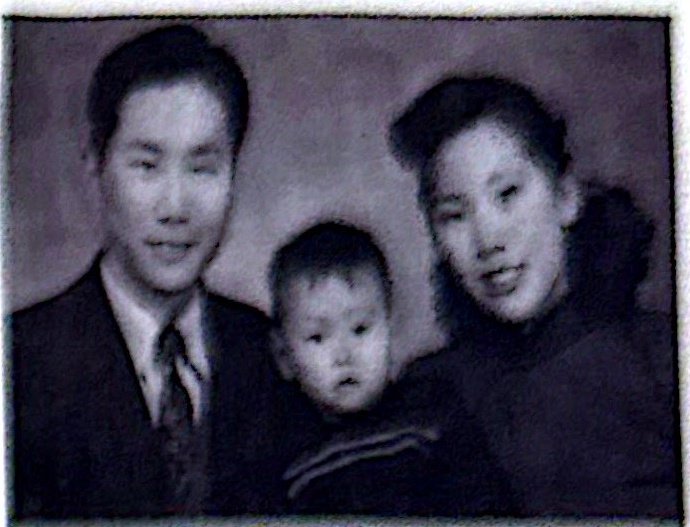
Chow Su-sing with his wife and son, taken shortly after their arrival in Hong Kong in 1950
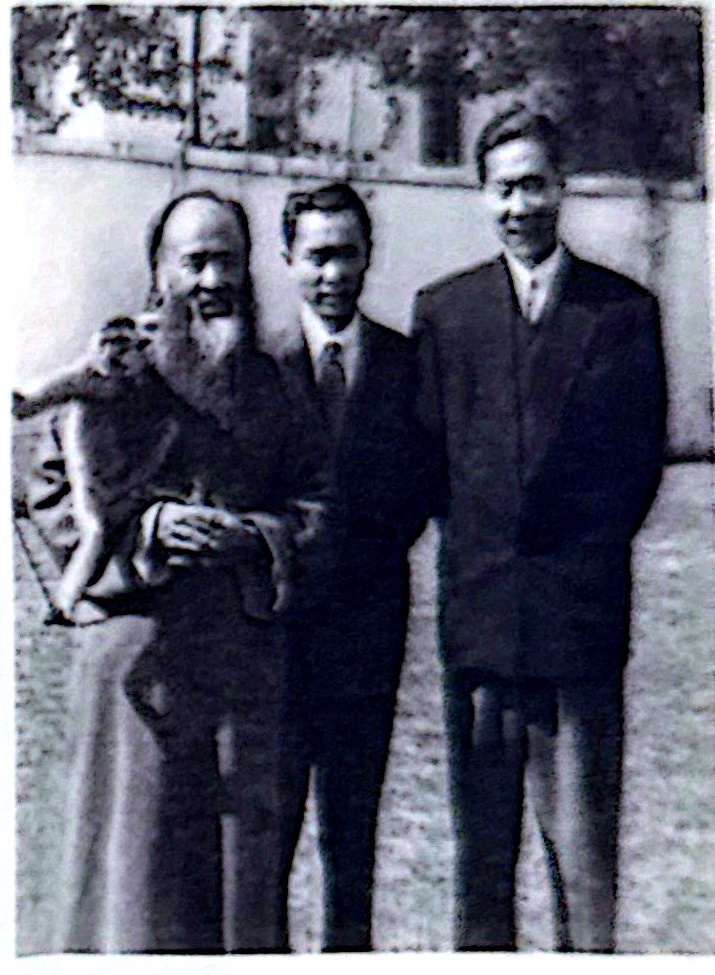
Chow with Zhang Daqian (left) and Zhang's son, Xinyi (middle), at Zhang's studio Dafengtang in 1951
1956
He received a copy of Dwelling in the Fuchun Mountains after Huang Gongwang from Wu Zishen as a gift. This gesture embodied Wu's desire to pass the torch to the younger generation. He organised elegant gatherings with painters from the north, such as Yao Ke (1905-1991), Xiao Lisheng (1919-1983) and Zhao Heqin (1894-1971) for the cultural cognoscenti to meet occasionally and share their interests in the Chinese arts. Other artists taking part in the gatherings included Zhao Shao'ang (1905-1998), Li Fenggong (1883-1967), Li Yanshan (1898-1961), Tao Yun (1911-2004) and Lu Shoukun (1919-1975).
1957
Chow held his third solo exhibition in Hong Kong at the Cecil Arts Gallery, showcasing sixty-four pieces of work. The exhibition attracted the presence of Lady Maurine Grantham, industrialist Tung Chi-ying and his spouse, theatre connoisseur Lee Zee-min and many other socialites. It also attracted sizeable media coverage from local newspapers. Thereafter, he held a solo exhibition once every three years. In the same year, he was awarded the first prize of the open competition in Chinese calligraphy and painting, organised by the Hong Kong Chinese Culture Association. He also won the first prize in the booth design competition on behalf of Freezinhot Bottle Co., Ltd, organised by The 15th Annual Exhibition of Hong Kong Products. Moreover, he participated in the Travelling Exhibition of Works by Chinese Painters from Hong Kong in Southeast Asia, jointly organised by the British Council and the Hong Kong Chinese Art Club.
1958
In July, he was invited by the Nippon Arts Council in Japan to exhibit his painting A Riot of Beauties in the 5th Art Exhibition held at the Tokyo Metropolitan Art Museum in Ueno. He was awarded a Certificate of Appreciation in acknowledgment of his contribution to the cause of Sino-Japanese cultural exchange. Other Chinese painters participating in the exhibition included Ma Shouhua (1893-1977), Zhang Daqian, Huang Junbi (1898-1991) and Pu Xinyu (1896-1963). His painting titled Angling on the River in Autumn was deeply appreciated by Zhang Daqian. Zhang wrote on the painting, 'This painting has inherited the aura of the art of Liuru Jushi (the other name for Tang Yin, a Chinese painter of the Ming dynasty); it demonstrates the level of the use of brush that no portrait painter from the past hundred years has achieved.' Up to this point, Chow and Zhang had jointly produced a total of thirty-three paintings.
1959
He became a member of the Hong Kong Chinese Art Club and was later elected vice chairman. Together with Yang Shanshen (1913-2004), a painter from the Lingnan School, they organised activities to promote Chinese painting in the Hong Kong Festival of the Arts.
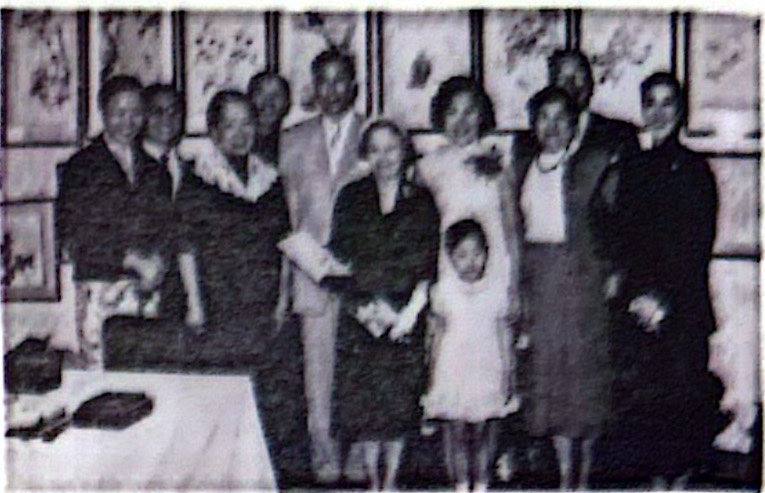
Chow's third solo exhibition in Hong Kong in 1957. From left: Mr. and Mrs. Tung Chi-ying, Mrs. Chow Yat-kwong, Yao Ke, Chow Su-sing, Lady Maurine Grantham, Chow Luk Hing-yu, Mrs. Yao Ke, Lee Zee-min, Mrs. Chan Wing-on; standing in the front: Amelia Chow (daughter of Chow Su-sing)
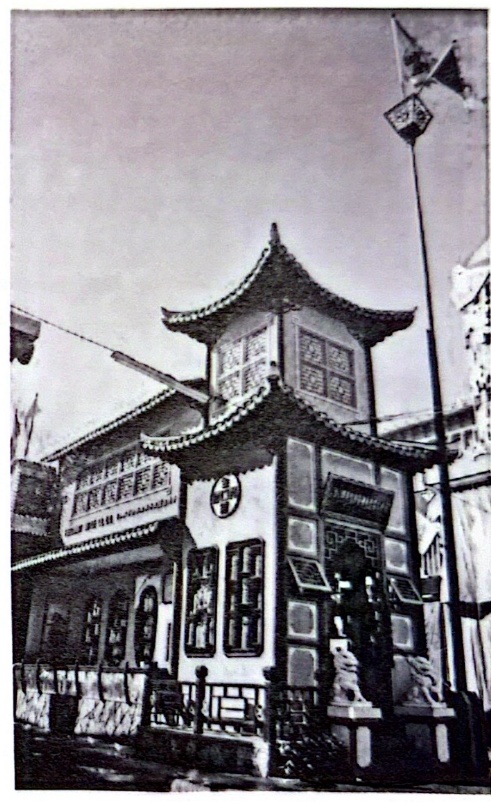
Chow won the first prize on behalf of Freezinhot Bottle Company in the booth design competition, organised by The 15th Annual Exhibition of Hong Kong Products in 1957
1960
He held his fourth solo exhibition in Hong Kong at St. John’s Cathedral. It was attended by stars of the silver screen such as Lee Ming-chu, Tu Chuan and Lin Daiyu. His mother, Wang Jianxin, died the same year.
1962
Beginning from April, he taught at the Art Department of Chung Hwa College, Hong Kong for two years. In June, he and his wife travelled to Taiwan to host a joint exhibition at the Sun Yat-sen Memorial Hall. They also toured Central and Southern Taiwan. At the invitation of the President of the New Asia College, Dr. Ch'ien Mu (1895-1990), he began to lecture in the Department of Fine Arts at the New Asia College. His exploration of landscape painting reached a breakthrough this year, as seen in four newly created paintings using splash-ink. He continued to pursue the techniques of splash-ink and freehand brushstroke in subsequent years, gradually forming a style of his own.
1963
In this period, he devoted himself to the causes of art education and Chinese painting research. He wrote two articles 'An Exploratory Study of the Technique of Painting the Flower and Bird by Xu Xi' and 'Short History of the Application of Pigment in Chinese Paintings' for New Asia Art, a magazine published by The Chinese University of Hong Kong. In addition, his first book Discourses on the Paintings of Plum, Orchid, Bamboo and Chrysanthemum was published.
1964
He held two joint exhibitions at the Hong Kong City Hall, one with his students in January and the other with his wife in November. The latter exhibition unveiled his first painting produced in large scrolls, titled Visiting Taroko, Taiwan.
1965
He took part in the 1st International Exhibition at Bangkok with his painting Peonies and Birds. The painting was sold at the exhibition and the proceeds were subsequently contributed to the fund for building the Thai Art Gallery. He began to conduct a Chinese painting programme on Hong Kong Rediffusion Television and became a tutor for the Chinese painting class in the Department of Extramural Studies of The Chinese University of Hong Kong. His work Two Eagles won the Golden Trophy Award for Outstanding Work at the 5th National Artworks Exhibition.
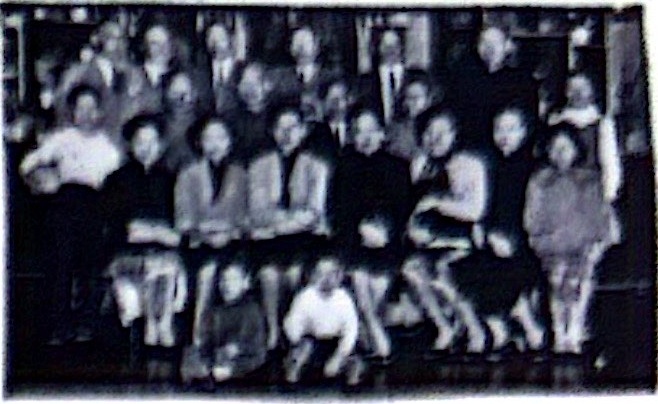
Chow, Wu Zishen, Dr. Ch'ien Mu, Wang Jiqian and his spouse at the elegant gathering in 1960
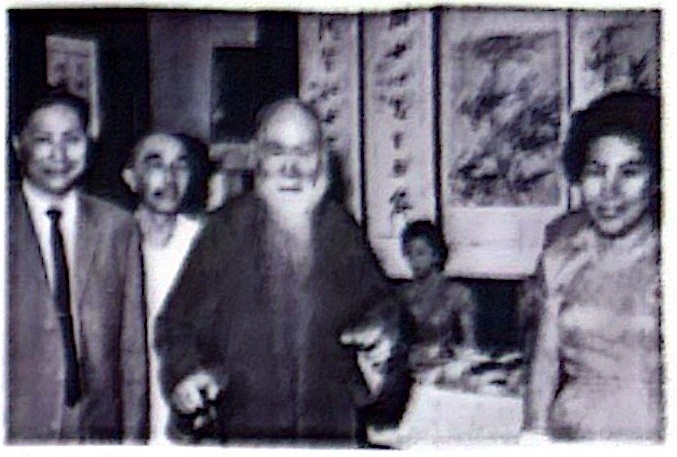
Calligrapher Yu Youren (middle) attending Chow and his wife's joint exhibition in Taipei in 1962
1966
His father passed away and left behind an important life motto for Chow, 'Be modest in everything: only then can you move as far as the sky and as wide as the earth.' In reminiscence of his father, he re-used the name ‘Liuyu Lu' for his studio, as a way to remind himself that there was always room for progress and new discoveries in his artistic creation. He presented a joint exhibition with his wife at the Taiwan Provincial Museum
1968
He visited Taiwan again. As a Fellow of the China Academy of Taiwan, he attended the 1st International Conference of Chinese Studies during which he presented his essay on the art of Bada Shanren.
1969
He decided to migrate to the United States. In November, he held an exhibition with his wife at the Hong Kong City Hall as a farewell to their sojourn in Hong Kong. The exhibition produced record-breaking sales for Chow—more than eighty pieces of work were sold.
1970
He completed his chronological notes on Bada Shanren, which were then published in the Journal of Fine Arts by the China Academy of Taiwan. He went on a trip throughout Southeast Asia, to Japan, Korea and Taiwan. In December, he was invited by the Nanyang University in Singapore to give a lecture titled 'The Development of Different Schools of Bird-and-Flower Painting'.
1971
In the first two months, he held a joint exhibition with his wife at the Singapore Chinese Chamber of Commerce and Industry and Bangkok Metropolitan Bank, Thailand. In August, he travelled to San Francisco with his wife for the first time. They also visited Zhang Daqian's new residence 'Huanbi An' in the town of Carmel. Thereafter, he held two exhibitions in Santa Monica and San Francisco which were well received by guests coming from San Francisco, Los Angeles, New York and Singapore. From this year until 1980, the Chow family lived in Los Angeles.
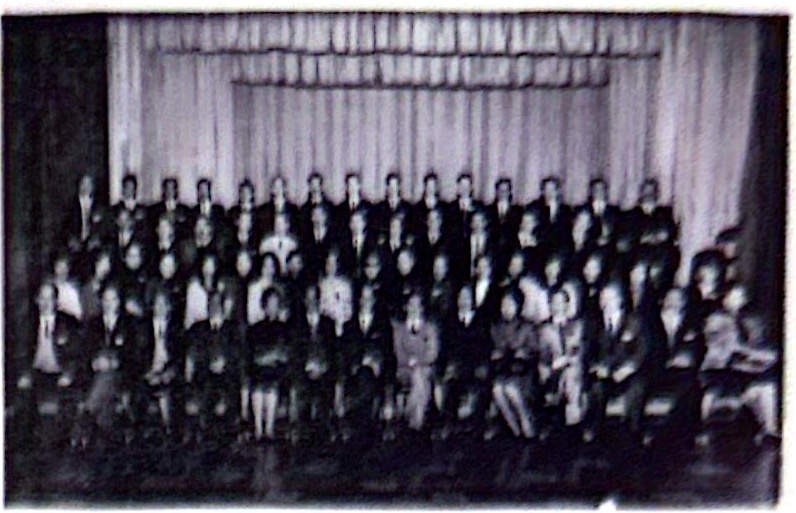
Chow (front row, 6th from right) with the inaugural graduation class of Chinese painting, Department of Extramural Studies of The Chinese University of Hong Kong in 1966
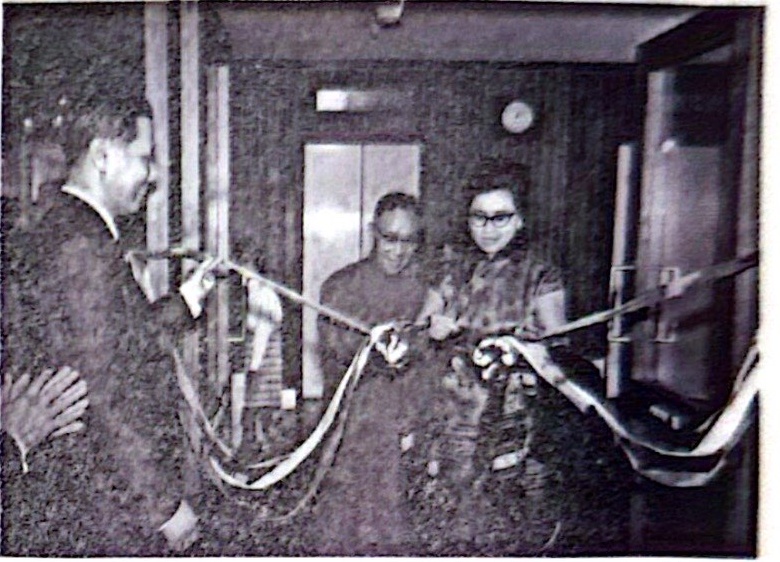
Dr. Ch'ien Mu and his late wife, Hu Mei-chi as officiating guests at Chow's Hong Kong exhibition in 1969
1972
He held three exhibitions this year. The first exhibition was held at the Institute for International Studies, Stanford University, followed by the second exhibition at Santa Monica College and then the third at Chinese Consolidated Benevolent Association, Los Angeles. Additionally, he took up the positions of Chinese Art Curator and Advisor at the Pacific Asia Museum, Pasadena.
1973
In March, he joined Zhang Daqian and his spouse for a trip in Los Angeles, while attending Zhang's exhibition '40-year Retrospection', organised by the M.H. de Young Memorial Museum in San Francisco. His review of the exhibition was later published in the U.S.A. edition of the Sing Tao Daily.
1974
He held a solo exhibition at the Pacific Asia Museum, Pasadena. At the invitations of St. John's University and Harvard University, he went to New York and Boston to exhibit his works and conduct demonstrations of Chinese painting. He organised Chinese painting classes for students at different levels in Los Angeles. He received the Commendation by the City of Los Angeles in recognition of his devotion to the cause of aesthetics in traditional Chinese painting. His book Bada Shanren and His Art was published.
1975
He made another visit to Zhang Daqian's residence 'Huanbi An'. Towards the end of the visit, he received a piece of ancient stone from Zhang's collections as a souvenir. In the next four years, he compiled A Guidebook on Painting Plum Blossoms and The Fundamentals of Chinese Floral Painting, a bilingual monograph, designed to promote traditional Chinese painting at home and abroad. During his nearly decade-long stay in the U.S., he utilised opportunities to exhibit, teach, demonstrate his art and do research, while also travelling extensively to enrich his knowledge and experience.
1980
The Chow family migrated to Vancouver, Canada. Before leaving America, Chow held an exhibition at the Pacific Asia Museum, Pasadena, which received tremendous support.
1981
He taught Chinese painting at the Centre for Continuing Education, University of British Columbia. In addition, he had two exhibitions in Taiwan and Hong Kong.
1983
Zhang Daqian passed away. Chow attended his posthumous exhibition held at the Pacific Asia Museum, Pasadena.
Chow at a joint exhibition with his students in the US in 1973
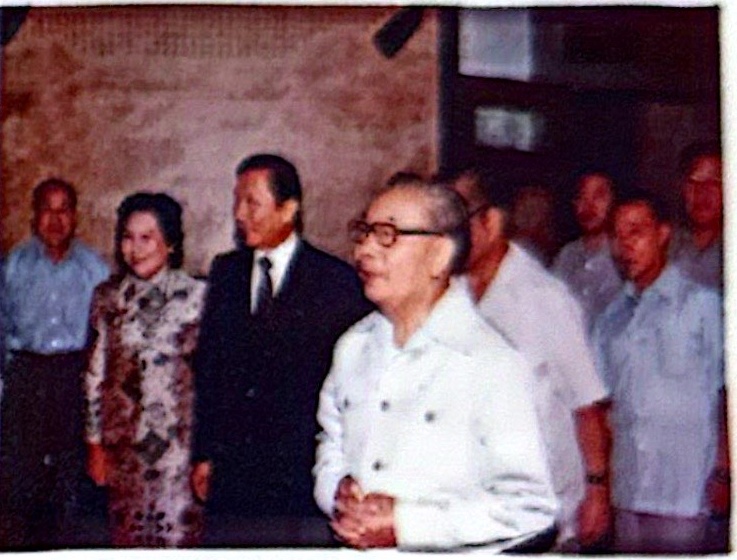
Chiang Ching-kuo, former President of Taiwan at Chow's exhibition in Taipei in 1978
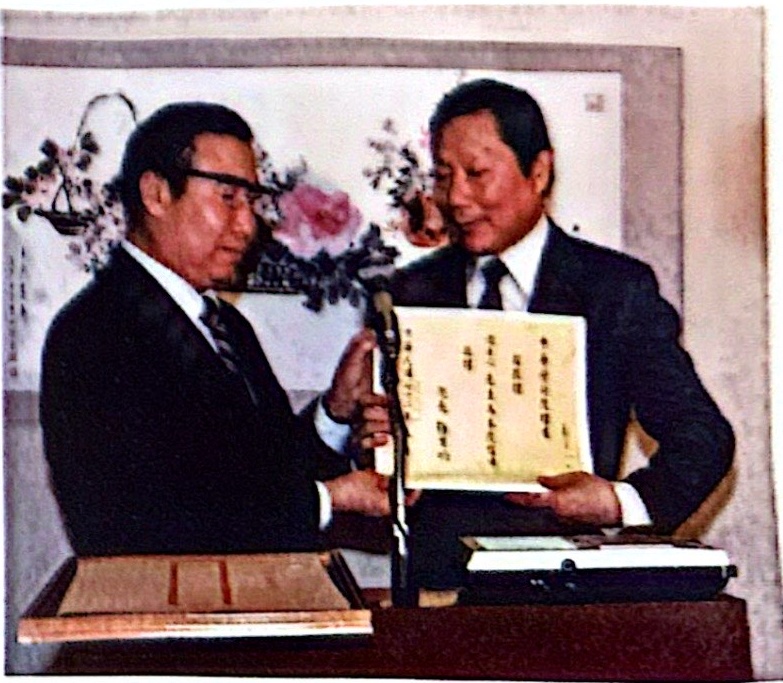
Chow became Academician of the China Academy, Taiwan in 1983
He was granted the title of Academician of the China Academy of Taiwan and was appointed Professor and Head of Art Department at Hua Gang (Tenure) Chinese Culture University, Taiwan. Furthermore, he completed another monograph entitled Flowers of the Four Seasons: A Manual in Chinese Brush Painting. In the same year, he was granted the honorary prize by the Chinese Culture University, and the gold medal by the National Museum of History in Taiwan.
1986
He held his first solo exhibition in Toronto. The publication Brief Concept of Chinese Painting Techniques is a testament to his dedication as an educator for over twenty years.
1987
In October, he visited the Three Gorges of the Yangtze River in China. Over the next two years, he created a series of fifty-six paintings revolving around this area as subject matter. In terms of writing, the four volumes of his Manual of Chinese Bird-Painting were published.
1988
In January, he returned to Hong Kong at the invitation of The Chinese University of Hong Kong's Fine Arts Department and held an exhibition at the Hong Kong City Hall. His work The Rocky Mountains, Canada became the first Chinese painting to be exhibited at The National Gallery of Canada; it remained on display for two years before embarking on a two-year touring exhibition around the Canadian provinces.
1989
In May, he held a solo exhibition titled 'Song of Brush' in Vancouver at the University of British Columbia's Institute of Asian Research.
1990
In November, he held a month-long residency at The Chinese University of Hong Kong's New Asia College under the designation of Kung's Visiting Scholar. His lecture at the University on the subject of 'The Direction of Modern Mainland Chinese Painting' was recorded in the periodical New Asia Life. Spurred by the words of fellow painter Wang Jiqian that 'he who has yet to go up Huangshan is not yet a painter', he took advantage of his time in the region to visit Huashan, Huangshan and Anhui province on a sightseeing tour. Upon returning, he completed the artwork Huangshan Hidden in the Clouds in the chamber designated for receiving scholars by the University. The piece was donated to the Fine Arts Department of The CUHK; another work executed in ink on bamboo was donated to the library, while one more piece on the city flower of Hong Kong, the Bauhinia, was donated to the New Asia College.
1991
He created a group of paintings titled Landscape of Huadong.
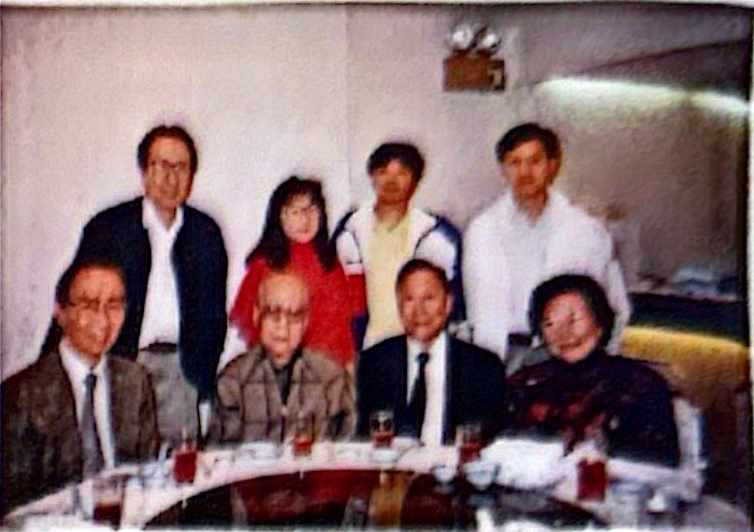
Reunion dinner with his friends in Hong Kong in 1988. Front row from left: photographer Tang Chen-chin, painter Wang Jiqian, Professor and Mrs. Chow Su-sing; back row from left: writer Chan Koon-chung, Wong Lui Kwok-wai, Stewart Wong, Poon Cheuk-wah
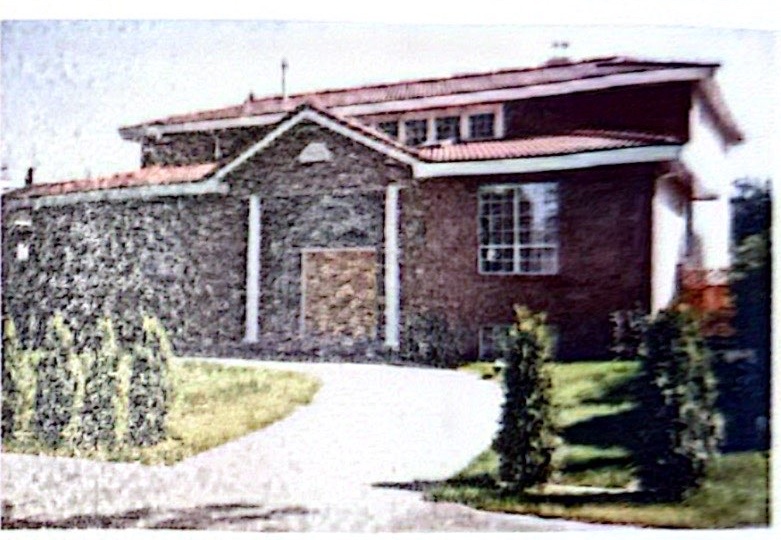
Chow designed his family residence 'Liuyu Lu' in Vancouver in 1989
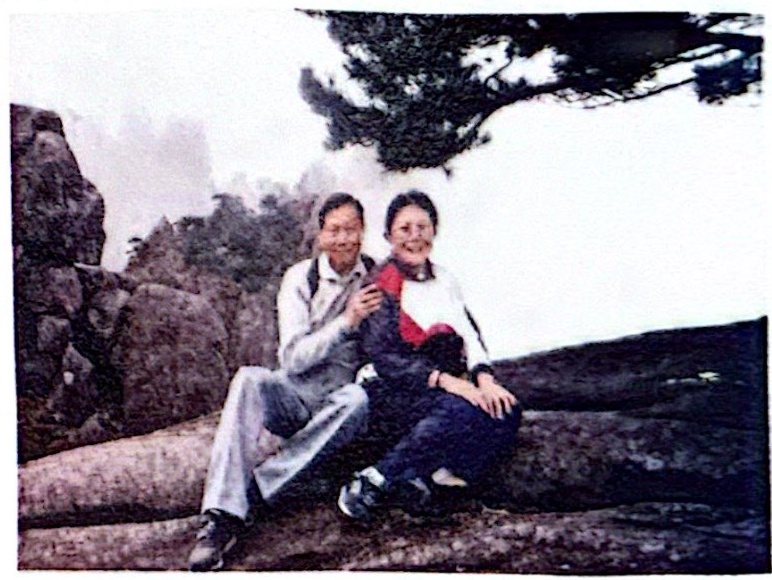
The Chows, taken in Huashan, China in 1990
1992
An exhibition was held at the University of British Columbia's Institute of Asian Research to commemorate his 70th birthday.
1993
In March, he travelled to South America, where he visited Brazil, Uruguay and Argentina. In May, he went with his wife to Vancouver in preparation for the establishment of the Chinese Canadian Artists Federation. In recognition of his outstanding contribution to the Canadian cultural sphere, Vancouver named Chow one of the Ten Outstanding Canadian Chinese of Vancouver'. At the end of the year, he returned to The Chinese University of Hong Kong's Fine Arts Department as a Chinese painting instructor for one year under the title of Visiting Artist.
1994
In May, he held an exhibition at the Hong Kong City Hall. In July, at the invitation of the Hong Kong Urban Council, he served on the adjudication panel for the 'Contemporary Hong Kong Art Biennial Exhibition'. During his residency at The Chinese University of Hong Kong, he completed a large-scale painting Iguazu Falls, Brazil and summarised his creative process for this piece in the article 'The Iguazu Falls in South America: From Observation to Creation': 'The sceneries depicted in the painting shift according to multi-point perspectives; in this way I understand what the old masters meant by saying “every step takes you to a new scene”.’ However, he believed that the painting was not created by purely reproducing what the eye saw. A necessary aspect of the process was intuitively understanding the properties of water as a substance, and incorporating this cerebral grasp of nature into the painting. This meant including the sounds and nuances of the atmospheric presence of the scene, in addition to the pictorial composition employed by the old masters (Zhou Shixin tanyi lu, pp. 298-300).
1995
In February, his painting The Eagle was selected for the Joint Exhibition of Contemporary Chinese Arts across the Centuries' held in Beijing. In August, he went on a cross-country trip across America, visiting six major states: California, New York, Massachusetts, Connecticut, Pennsylvania and Maryland.
1996
He held an exhibition with his wife in commemoration of their golden wedding anniversary at the Institute of Asian Research of the University of British Columbia. In an interview, he attributed the longevity of their union to 'mutual love and understanding'.
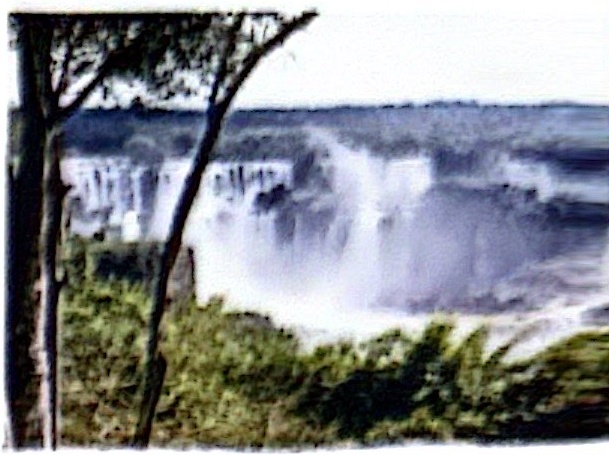
Photograph of the Iguazu Falls in Brazil, taken by Chow during his trip in 1993
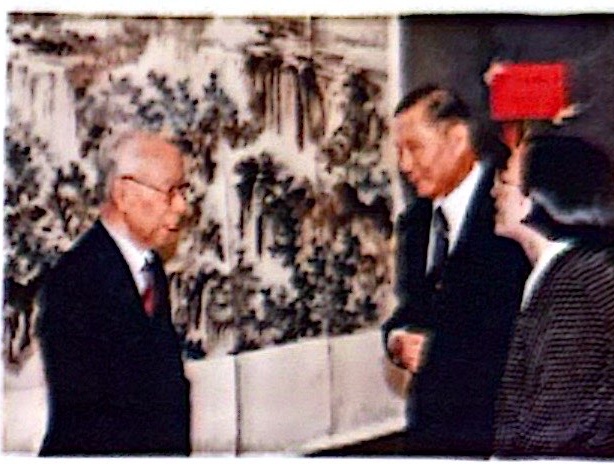
Professor Jao Tsung-I (left) and Mayching Kao, former Chair Professor of Fine Arts, The Chinese University of Hong Kong (right) attending Chow's Hong Kong exhibition in 1994
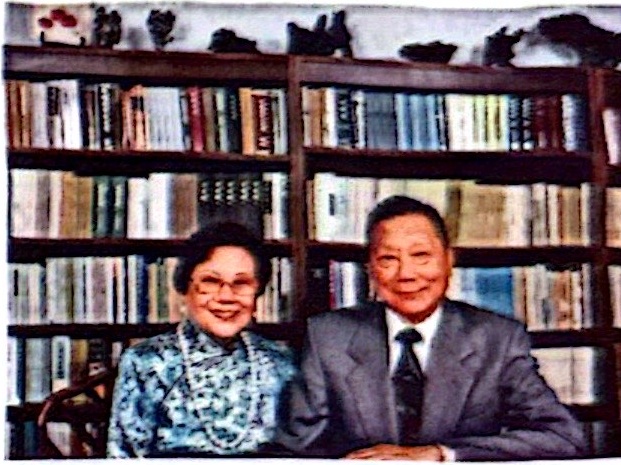
The Chows, taken before their golden wedding anniversary
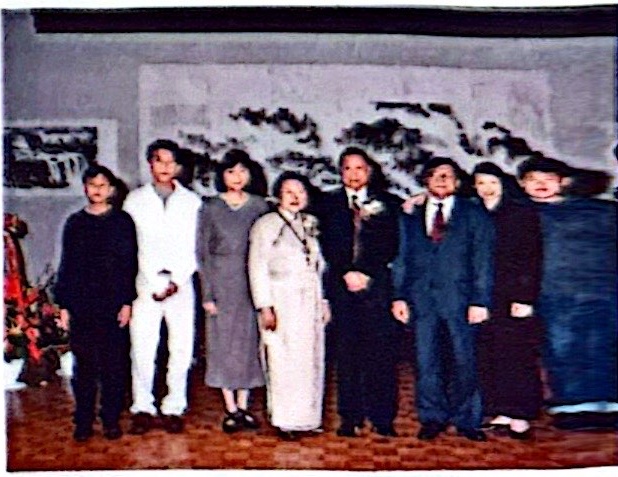
The Chows with their children and grandchildren
1997
He revisited China, exhibiting recent works in the country for the first time in fifty years at the Shanghai Art Museum. While there, he also toured Beijing, the Rehe Mountain Resort, Tianjin, Qingdao, Jinan, Qufu, Taian, Kunming, Xi'an, Chengdu, Leshan, Luoyang, Zhengzhou, Songshan Shaolin Temple, Wuxi, Zhenjiang, Yangzhou, Nanjing, Tunxi, Huangshan, Thousand Island Lake and Hangzhou.
1998
He published the monograph Vegetables, Fruits, Insects and Aquatic Life Paintings.
2000
Entering the new millennium, he received two major awards: firstly, the Asian Pacific Art Institute of America in Maryland awarded him 'The 20th Century Award for Art Accomplishments', secondly, he was awarded 'Man of the Year 2000' by The American Biographical Institute. He published Zhou Shixin tanyi lu, a collection of essays written over the last sixty years of his artistic career. In October, he travelled with his friends to northern China, visiting Port Arthur, Dalian, Jilin, Changchun, Shenyang, Harbin, Inner Mongolia, Shanxi and Beijing. In December, he held a solo exhibition at the Kwang Hwa Information and Culture Centre in Hong Kong.
2002
In June, he organised an exhibition in celebration of his 80th birthday under the auspices of the Institute of Asian Research of the University of British Columbia.
2003
He received five major awards this year, including the International Famous Figures Research Institute of China's Worldwide Artistic Contribution Award' and Chinese Circles of Art Award for Outstanding Achievement', Chinese Cultural Centre of Greater Vancouver's 'Artistic Achievement Award', People's Daily Culture Centre's 'Master in the Chinese Circles of Art', and Ministry of Culture of China's 'Love for Western China: International Exhibition of Calligraphy Painting and Photography Honorary Award:.
2004
He published Huaqing huaqu, in which he meticulously discusses one hundred and ninety-eight works by artists of historical significance. He travelled to Xi'an, Tianshui, Lanzhou, Xining, Dunhuang, Xinjiang, and Urumqi. He once again received five awards, including the Gold Certificate of 'World Outstanding Chinese', jointly awarded by Outstanding Chinese Yearbook and World Company Association in China.
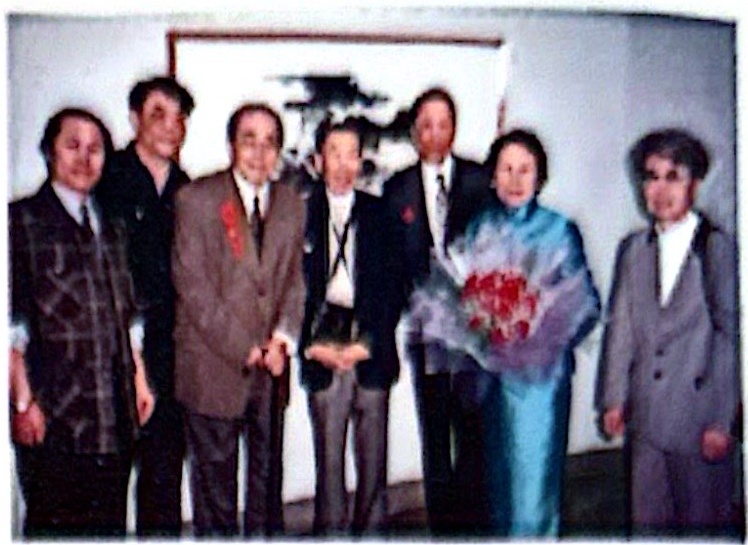
Chow's exhibition in Shanghai in 1997. Officiating guest Cheng Shifa (3rd from left), Fan Jia and his spouse (1st and 4th from right)
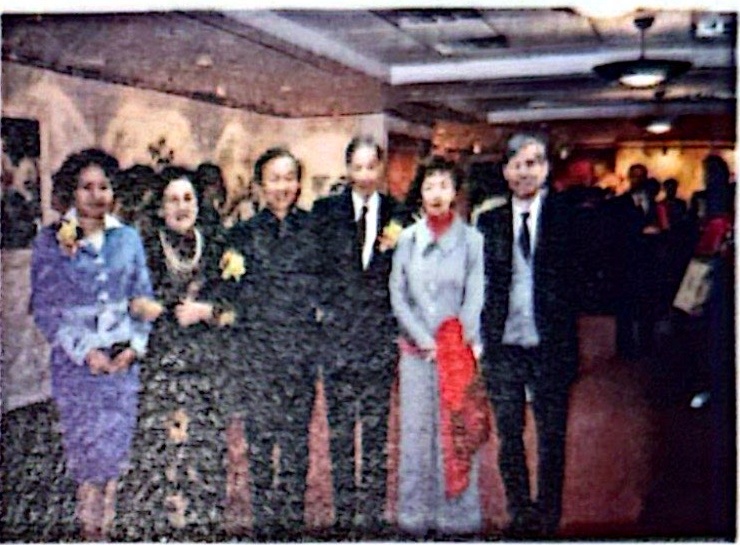
Chow with Professor Charles K. Kao, former Vice Chancellor of The Chinese University of Hong Kong (3rd from left) and friends, taken at his exhibition in Hong Kong in 2000
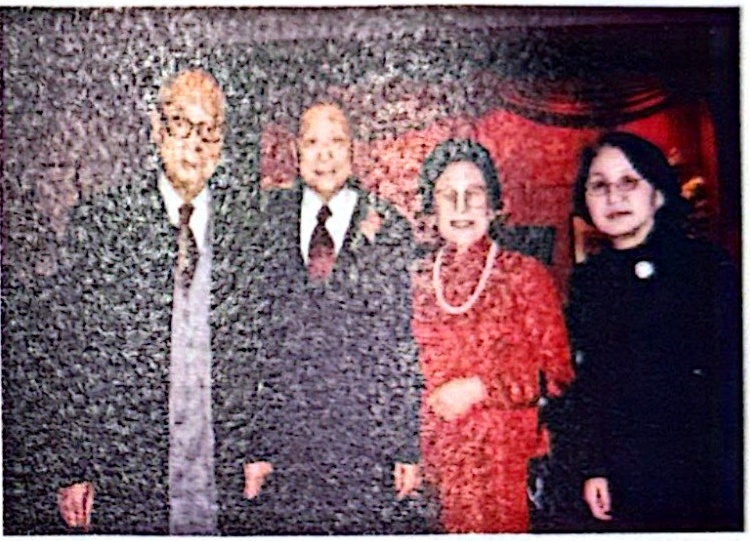
Yang Shanshen and his spouse at Chow's 80th birthday exhibition in 2002
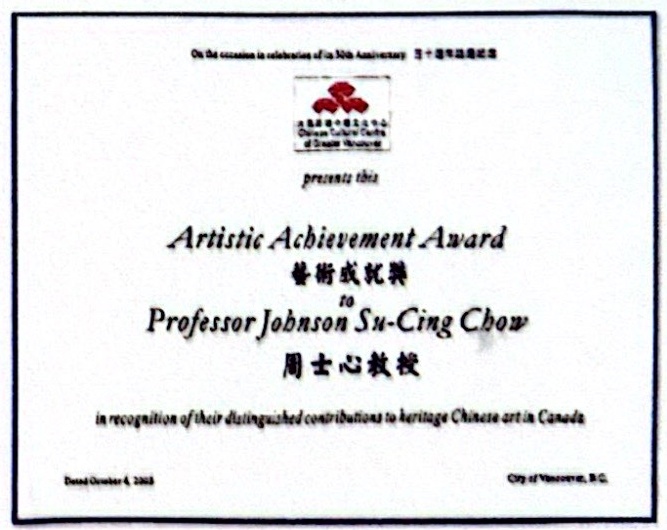
Certificate of 'Artistic Achievement Award' awarded by the Chinese Cultural Centre of Greater Vancouver in 2003
2005
He held a solo exhibition at the National Art Museum of China, displaying his work in three massive scrolls, Zhangjiajie. In addition, the exhibition 'In Union with Nature-Chinese Paintings by Master Chow Su-sing' was held at the Chinese Cultural Centre of Greater Vancouver.
2006
He commemorated his diamond wedding anniversary, returning to Suzhou to visit relatives with his children and grandchildren; he received from his nephew a fan on which he painted when he was seventeen; it was a poignant moment of recollection. He was named by The Vancouver Sun as one of the '100 Influential Chinese Canadians in British Columbia', for his lifelong contributions towards the artistic life of the community.
2007
In March, he presented Jiuzhaigou in Autumn, a work done on ancient paper from the Qing dynasty, at the Chinese Cultural Centre of Greater Vancouver. In October, he held the solo exhibition 'The Art of Johnson Chow' at the Baoqu Tang Gallery in Hong Kong.
2008
After the Sichuan earthquake, he donated twelve paintings for auction, the proceeds of which went towards disaster relief in the region.
2010
At the invitation of the Suzhou Museum, he once again returned home to hold a solo exhibition titled 'Return Home with My Beloved Paintings'.
2011
In April, he received the 'Community Achievement Award' from the Government of British Columbia in recognition of his continued donations of paintings to charity and his overall contributions to the betterment of community life. In August, he participated in a joint exhibition of calligraphy titled 'Passion for Ink' held at the Chinese Cultural Centre of Greater Vancouver.
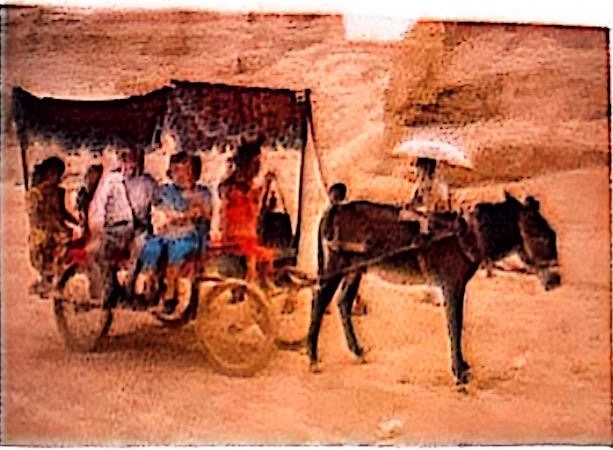
The Chows, taken in the Ancient City of Gaochang, Xinjiang in 2004
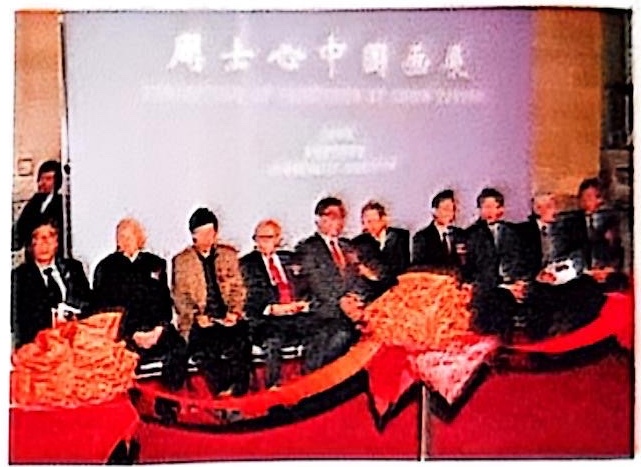
Opening ceremony of Chow's exhibition at the National Art Museum of China in 2005
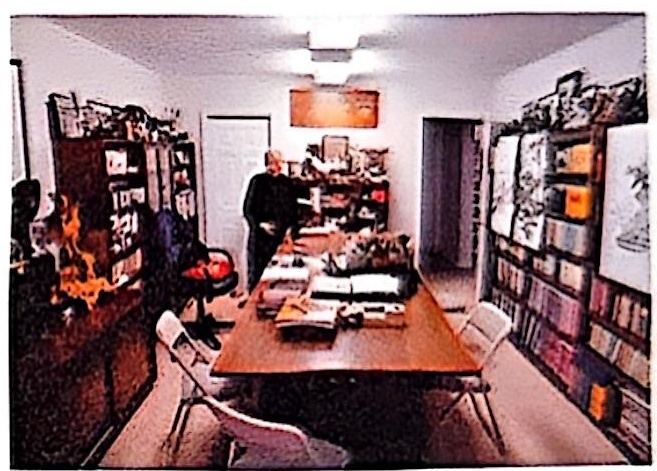
Chow at 'Liuyu Lu' in 2009
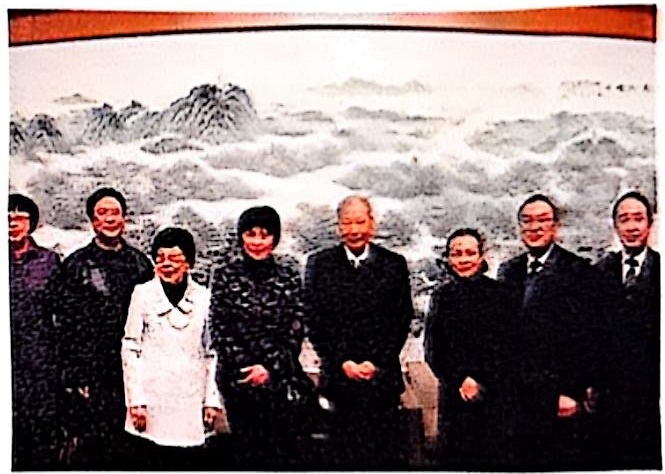
Chow with the representatives of Jiangsu Provincial Government at 'Return Home with My Beloved Paintings' exhibition in 2010
周士心
Professor Chow, we are proud to know you as a British Columbian who has devoted your life to
sharing your calligraphy and paintings, promoting Chinese art and culture, and encouraging
education in the arts.
- Christy Clark, Former Premier of BC
- Christy Clark, Former Premier of BC